
Morocco Done Well: Where to Go, What to Do, and What to Bring Home

Morocco is less about checking off cities and more about slowing down enough to notice the details. And the details are spectacular.
I've lived in places like Turkey, Germany, and New York, where you're constantly surrounded by talent and culture, but Morocco sits in its own category entirely. It's a place defined by craftsmanship passed down through generations, by beauty shaped slowly over time, and by a history you don't just see but actually feel as you move through it.
When experienced well, each city is generous in what it reveals.
What Morocco Is Known For
Across the country, you'll find artisans working in crafts passed down through generations: handwoven rugs, leather goods and slippers, intricate tilework, carved wood and plaster, and brass and metal lanterns. Each region carries its own distinct style, so what you find in Marrakech looks completely different from what you'll see in the Atlas Mountains or along the coast. That variety is part of the experience. You start to understand how deeply place shapes craft.
Where to Go
Marrakech
Energy, craft, and layered chaos.
What to Do
- Wander through the souks
- Visit Ben Youssef Madrasa
- Experience a traditional hammam
- Lunch overlooking the medina (try Nomad for the views and the food)
- Dinner at the night market
- Visit the Yves Saint Laurent Museum
What to Bring Home
- Handmade rugs
- Leather slippers, or cowgirl boots with rug sewn into the side (yes, this is a thing, and yes, you need them)
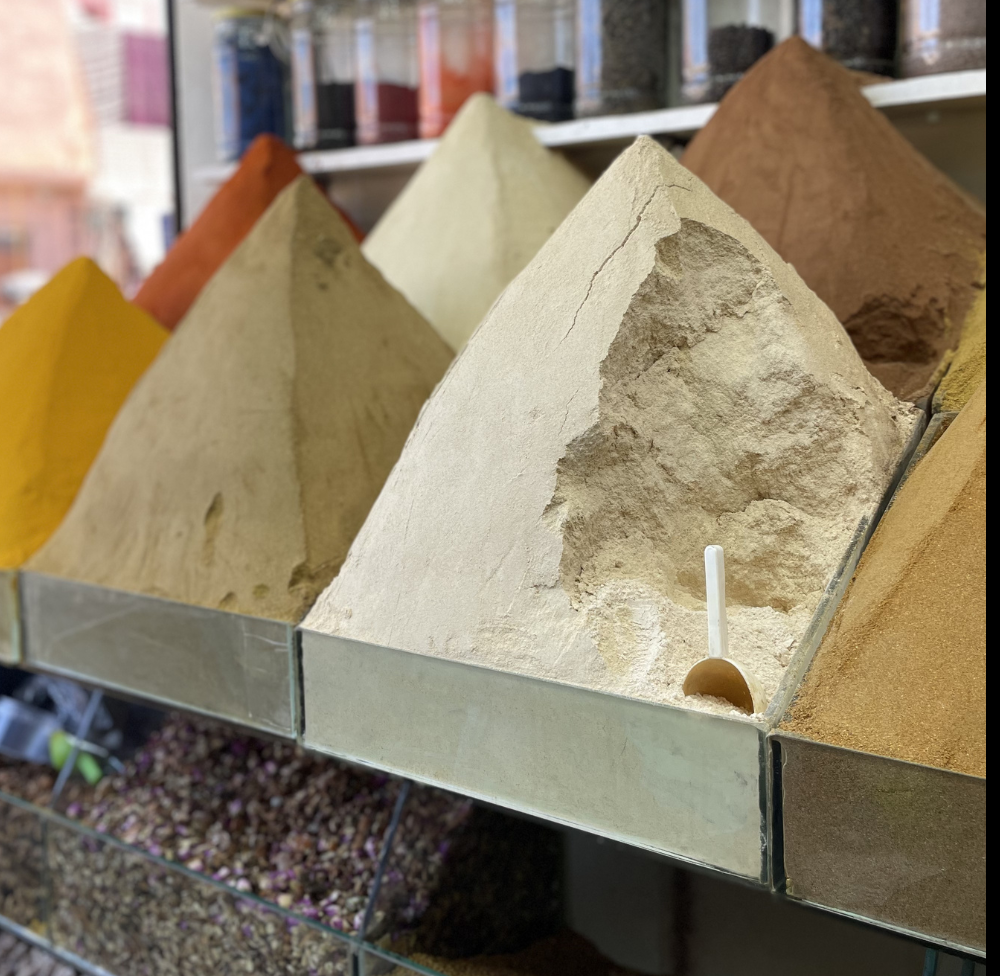
- Spice blends from the markets
One of my favorite memories from Marrakech was sitting at a small fish market near Bab Doukkala, eating freshly grilled fish alongside locals. No reservations, no menu, just the best thing I ate all trip.
Fez
Where craftsmanship feels sacred.
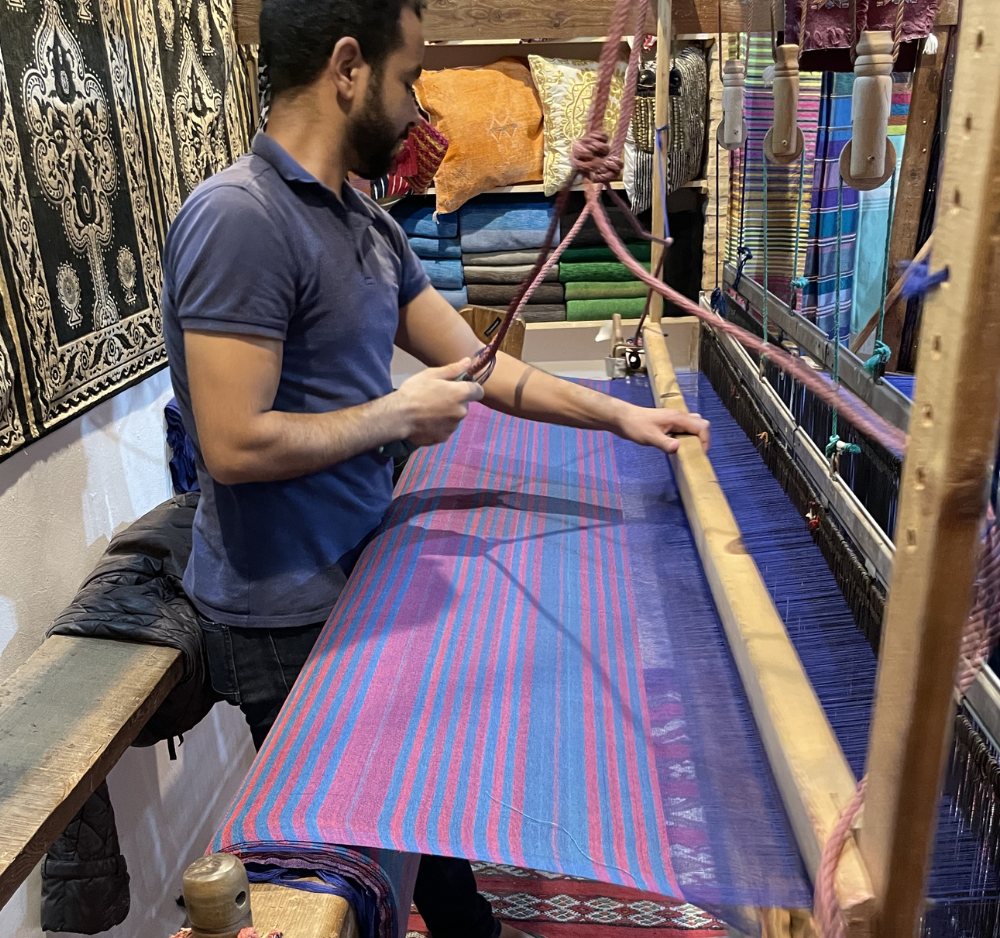
The mosques and madrasas in Fez are covered in intricate tilework and hand-carved wood that feels almost impossible in its detail, and the whole city reinforces the same idea: craftsmanship here isn't preserved for tourists. It's just daily life.
What to Do
- Visit the Chouara leather tannery
- Take a guided walk through the medina
- Admire the tile and woodwork throughout the city
What to Bring Home
- Custom leather jackets or bags
- Hand-painted ceramics
Essaouira
Ocean air and creative energy.
Essaouira feels like Morocco taking a deep breath. After the intensity of the bigger cities, the ocean air genuinely changes the pace, and it's the kind of place where lunch has a way of turning into a long, unhurried afternoon.
What to Do
- Walk along the Atlantic ramparts
- Explore small art galleries
- Watch fishermen bring in the day's catch
What to Bring Home
- Thuya wood pieces made by local artisans
- Small works from local galleries
Chefchaouen
A place for wandering.
The blue-painted streets wind through the mountains, and Chefchaouen is one of the few places where getting genuinely lost feels like exactly the right plan.
What to Do
- Get lost in the blue alleyways
- Take in the mountain views
- Stop for mint tea in a café and let the afternoon disappear
What to Bring Home
- Woven blankets and textiles
- Painted ceramics
Rabat
Calm, coastal, and unexpectedly grounding.
Rabat genuinely surprised me. It's Morocco's capital, but it feels far calmer than Marrakech or Fez, and the markets here are smaller and full of beauty. Some of my favorite rugs from the whole trip came from Rabat. It's a wonderful place to experience Morocco's depth without the intensity of the larger cities.
What to Do
- Visit the Kasbah of the Udayas
- Explore the smaller local markets
- See Hassan Tower and the Mausoleum of Mohammed V
What to Bring Home
- Leather goods
- Berber rugs
- Brass lanterns
How to Experience Morocco Well
This is the difference between seeing Morocco and actually feeling it. Hire local guides through your riad or villa, stay somewhere with staff who know the area deeply, and let your home base shape your experience rather than a rigid itinerary. Leave space to sit, reflect, and follow curiosity wherever it leads.
If you're traveling with a group, consider a full riad in the medina or a villa just outside it. The staff often become your bridge to the culture, guiding you toward markets, makers, and places you wouldn't find on your own. That's where the best experiences tend to happen.
What I Would Do Differently
I would spend more time in fewer places. When I first went, I moved quickly without fully understanding how far cities were from each other or how much each one had to offer. I also traveled between cities mostly by train, which was beautiful but long. For the farther routes, I'd fly next time to preserve more energy for actually exploring.
If I could do it again, I'd stay longer in each city, let local recommendations lead more, and build in full days with no agenda at all. Morocco is not a place that reveals itself quickly, and the more time you give it, the more it gives back.
If You're Planning a Trip Like This
Morocco taught me that travel is better when it's slower, more intentional, and shared with people you love. The best moments happened not because of what was planned, but because of the space left for the unplanned.
That's the kind of travel Autre and Part is built around: homes and experiences designed to help you gather well, wherever you are in the world.
Join us below for early access and more guides like this.